At a Glance
Free Grounds
Park Entry
TPWD and the official park operator both note that park grounds and parking are free; guided cavern tours are the paid piece.
90 Minutes
Main Tour
The standard walking tour runs about 90 minutes and descends 52 stone steps into the cavern.
1.25 Miles
Trail Network
Short above-ground trails, an observation tower, and CCC structures make this more than a ticketed cave stop.
Day-Use Only
Biggest Reality Check
There is no camping on-site. Inks Lake is the nearest state park campground, about six miles north on Park Road 4.
Longhorn Cavern State Park is easy to misread if you only know the name. It is not a giant hiking park. It is not a campground. And it is not the kind of cave stop where you pull over, peek inside for fifteen minutes, and move on.
What it actually is: a day-use state park on Park Road 4 where the grounds are free, the cave tours are guided and ticketed, the Civilian Conservation Corps left behind some of the most distinctive stonework in the region, and the whole place works especially well as a heat-proof pivot between Inks Lake, Marble Falls, and the broader Highland Lakes corridor.
TPWD is explicit about the basics. Longhorn Cavern is day-use only. Park entry is free. Cave access is by paid guided tour. That sounds simple, but it changes the way the park should be used. This is a place to plan around tour timing, not a place to treat like a casual trailhead.
Planning Your Visit: Hours, Tickets, and the Day-Use Reality
The first thing to understand is that Longhorn Cavern has two layers of planning.
- Park grounds and parking are free.
- Guided cavern tours are the paid piece. For 2026, standard Walking Tour prices start at $24.00 for adults (12+), $17.00 for children (4-11), and infants (0-3) are free. Prices vary by day and season; weekend rates are typically higher. Wild cave tours start at $110.
- Reservations are highly recommended. Tickets can be bought at the visitor center, but if the timing matters, reserve ahead online.
- The park is day-use only. There is no on-site camping. Inks Lake State Park is the nearest state-park campground, about six miles north on Park Road 4.
- Hours shift seasonally. Standard hours are 9 a.m. to 5 p.m. on weekdays and 9 a.m. to 6 p.m. on weekends and holidays. From Memorial Day to mid-August, the park opens daily 9 a.m. to 6 p.m. The entrance gate closes one hour after the last scheduled tour departs.
That combination makes Longhorn one of the better “pair it with something else” parks in the Hill Country. It is strong on its own, but strongest when the rest of the day already has shape.
What Makes Longhorn Cavern Different
Longhorn is not just a cave with a gift shop attached. The cave itself is geologically unusual by Texas show-cave standards. The official Longhorn materials emphasize that it was shaped by an ancient underground river, not just by the slower dripstone logic people tend to imagine when they hear “cavern.” That matters because the result feels different underground: broader rooms, smoother carved passages, and a stronger sense that water once moved through the place with force.
The cave also has named rooms that give the tour more character than a generic walkthrough. Crystal City and the Hall of Diamonds have calcite crystal formations. The Hall of Marble is composed of dolomite. The Queen’s Watchdog is a distinctive dolomite formation that resembles a seated dog. The Sinkhole is where the 52-stone-step descent begins, with a natural bridge overhead.
The human history matters almost as much.
TPWD’s history page and the Handbook of Texas trace several distinct chapters here:
- prehistoric peoples used the cave for shelter and as a “trap cave.” Hunters drove animals over the opening, and scientists have recovered mastodon, bison, grizzly bear, and deer bones from inside
- Native Americans mined chert from the cave for tool-making
- outlaws including Sam Bass reportedly used the cave as a hideout in the 1870s, with legends of concealed stolen money
- bat guano (potassium nitrate) was mined here and processed into gunpowder for the Confederacy during the Civil War
- the main room served as a speakeasy with live music during Prohibition and continued as an underground nightclub into the 1930s
- Texas purchased the 637-acre property in 1931
- the park first opened to the public in November 1932, with CCC Company 854 continuing major excavation and construction work from 1934 through 1940
- in the 1960s, the cavern was designated a licensed nuclear fallout shelter during the Cold War
- in 1971, the U.S. Department of the Interior designated the cavern a Registered Natural Landmark
That is why Longhorn works better when you treat it as geology plus history plus parkitecture, not just “a cave near Burnet.”
The Walking Tour: Who It Fits and What It Involves
The standard walking tour is the version most people should book first.
According to the official trip-planning and FAQ pages, the tour:
- lasts about 90 minutes
- descends well below the surface into the cavern system
- starts with 52 stone steps
- stays around 68°F year-round
- includes wet sections depending on recent rainfall
- has two low-clearance points at 4’4” and 4’8”
- usually includes a brief lights-out demonstration
That last point matters because it tells you what kind of tour this is. Longhorn is interpretive. You are there for the geology and history, yes, but also for the shift in perspective that happens when the guide kills the lights and reminds you how dark a real cave actually is.
The walking tour is the right fit for:
- first-time visitors
- families with kids who can handle stairs and a dark enclosed environment
- summer travelers trying to escape surface heat for a couple of hours
- people who want a Highland Lakes add-on that feels specific, not filler
What catches people off guard is not difficulty so much as cave-specific friction. There are no restrooms underground. The steps are stone, not elevator-assisted. The route is mostly paved once you are inside, but it is still a real cave environment rather than an ADA-grade museum corridor.
The Wild Cave Tour: A Different Product Entirely
Longhorn also runs a 3-hour Wild Cave Tour, and it should be treated as a separate activity, not an upgraded walking tour.
The official operator describes it as a wriggling, crawling trip through the undeveloped lower level. Guests must be:
- at least 8 years old
- in good physical condition
- willing to sign a waiver
- able to handle narrow passages
The Wild Cave Tour is physically demanding and restricted. Guests with a girth (measured at the widest point, such as shoulders or hips) exceeding 52 inches cannot participate because of the tightest rock formations. Participants must be at least 8 years old, in good physical condition, and should expect to get wet and muddy.
The Blacklight Tour: A Weekend Morning Option
The park also offers a Blacklight Tour on weekend mornings at 9:30 AM only. Using UV flashlights, the tour reveals glowing fluorescent minerals hidden from standard white light. Reservations are mandatory. If your timing lines up, it is a worthwhile addition, especially for kids and anyone who wants a different angle on the geology.
Above Ground: The Part People Underestimate
One of the easiest mistakes here is acting like Longhorn is only underground.
TPWD’s map and wildlife-trail resources show about 1.25 miles of trails above ground:
- Backbone Ridge Nature Trail
- Karst Discovery Trail
- Warbler Walk
- Wildflower Way
- Comanche Spur
That is not enough trail mileage to make Longhorn a hiking-first destination. It is enough to make the park worth arriving early or lingering after your tour, especially in cooler weather.
The above-ground appeal is three-part:
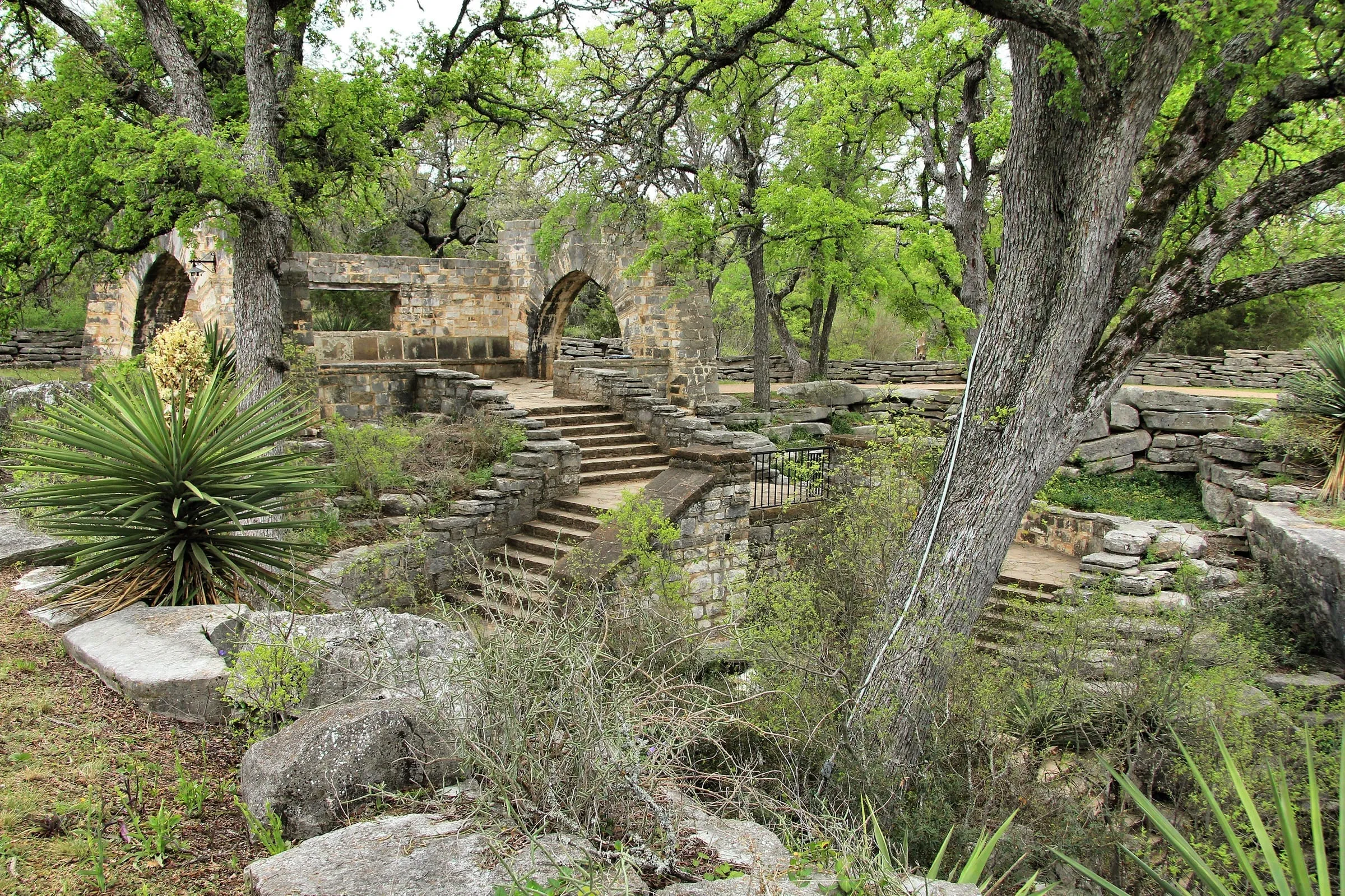
- CCC structures: stone stairs, walls, buildings, and the broader park layout are part of the point here
- Observation tower: the FAQ specifically calls out the 360-degree view and even notes views toward Falkenstein Castle
- Short nature trails: enough to stretch your legs and make the park feel like a state park rather than a ticket counter
TPWD’s Stone Bluffs Loop wildlife page also notes that the juniper-oak woodland here provides nesting habitat for golden-cheeked warblers, which gives spring visits a little more depth than the cave alone.
Accessibility, Pets, and the Practical Rules That Matter
This is the section where the official FAQ is more useful than generic travel summaries.
The important points:
- The cavern and visitor facilities are not wheelchair accessible.
- Leashed dogs are allowed on park grounds and trails, but not in the cavern or park buildings unless they are trained ADA-defined service animals.
- There are no restrooms in the cavern. Use the visitor center before your tour.
- Strollers are allowed, but must be hand-carried down the 52 stairs. Side-by-side strollers are not allowed.
- Backpack child carriers are allowed, but low ceiling clearance matters.
That is why Longhorn is not the kind of stop to improvise once you are already rolling down Park Road 4 with a tired toddler and no reservation. It goes better when you decide in advance whether your group actually fits the experience.
What to Bring
Longhorn is not gear-heavy, but the wrong shoes and the wrong assumptions can make it annoying fast.
Bring:
- Closed-toe shoes with traction. The official guidance says this directly, and it is worth following because wet patches are normal after rain.
- Water for the surface part of the day. The cave is cool. The parking lot and short trails are still Hill Country hot.
- A light layer if you run cold indoors. Sixty-eight degrees feels great after July heat, but cool enough to notice if you are in a damp cave for 90 minutes.
- A hat and sunscreen if you plan to spend much time on the grounds or observation tower.
If you are still building the rest of the day-hike setup, our best hiking shoes for the Texas Hill Country, best daypacks for Hill Country hiking, and best water bottles and hydration packs for Texas summer hikes guides cover the exposed-surface side of the trip better than a generic packing list.
The Right Trip Shapes for Longhorn Cavern
Longhorn is best when it plays a specific role.
Best as a same-corridor contrast to Inks Lake
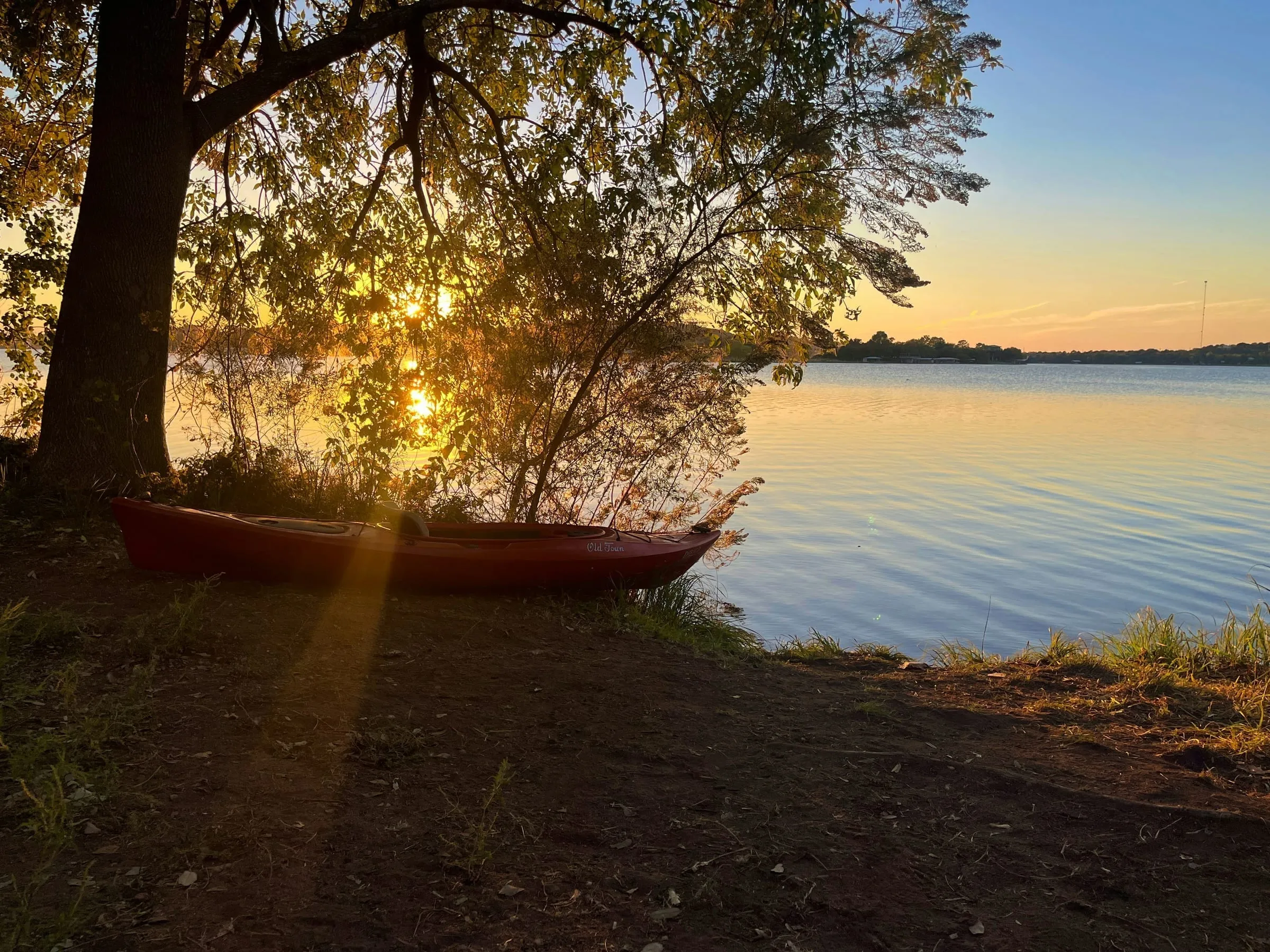
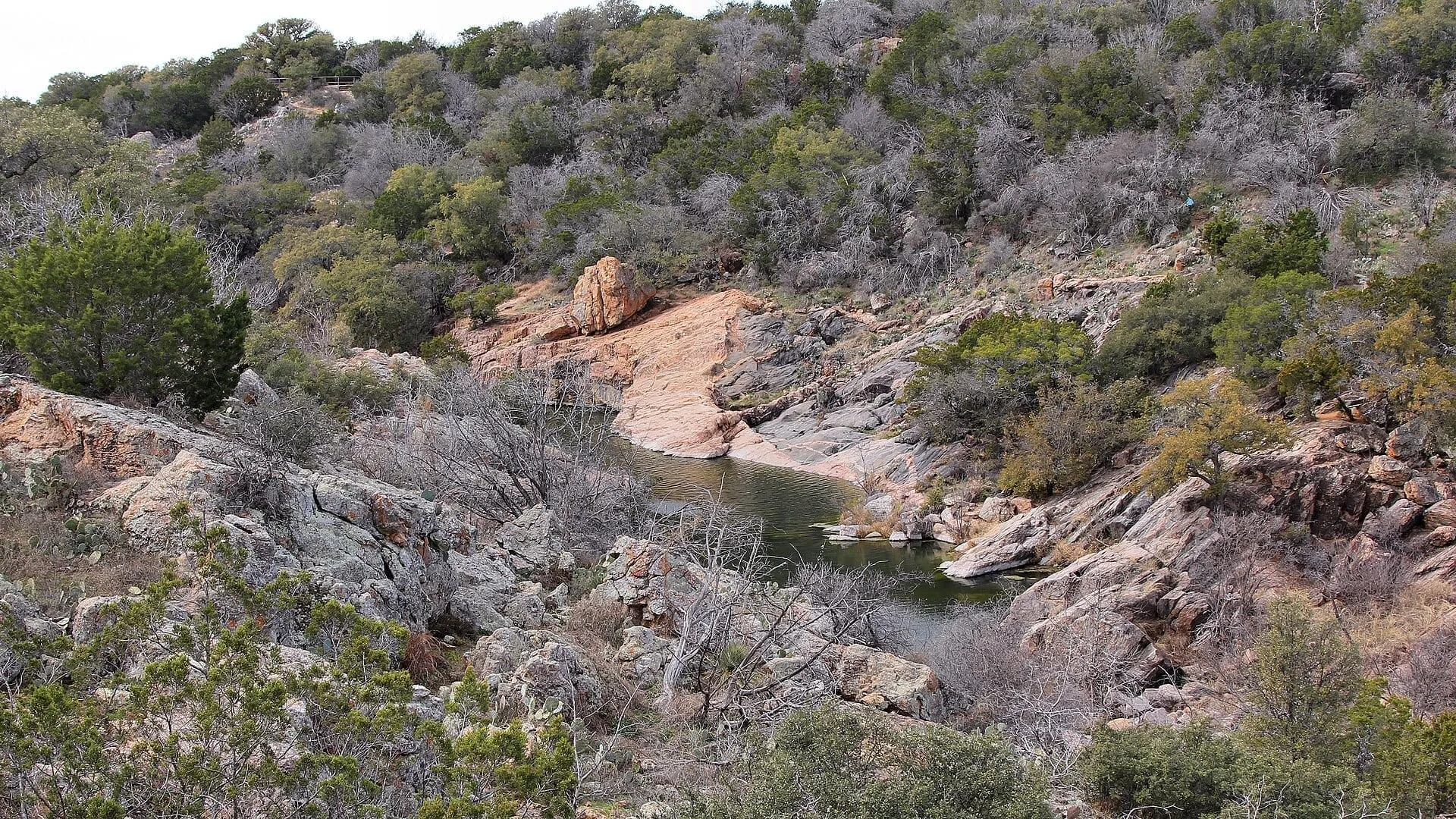
This is probably the cleanest pairing in the region. Morning at Inks Lake State Park for swimming or paddling, afternoon at Longhorn for cool air and geology. Granite shoreline first, cave second. It works because the two places feel totally different while sitting only a few miles apart.
Best as a Marble Falls add-on
If you want a town base, Marble Falls is the easiest one. The park does not need a full overnight on its own for most visitors, but Marble Falls turns it into part of a full weekend instead of a one-off stop.
Best in a geology-focused two-park weekend
If you want the more ambitious version, pair Longhorn with Colorado Bend State Park. Colorado Bend is rougher, bigger, and more wilderness-forward. Longhorn is more interpretive and structured. Together they make a strong Hill Country geology weekend.
Best in hot weather
This is where Longhorn quietly becomes one of the most useful parks in the region. A lot of Hill Country trip ideas fall apart in peak afternoon heat. Longhorn gets better in that exact window.
Seasonal Timing and the Drive In
Spring and fall are the easiest seasons overall because the short surface trails, tower, and surrounding drive all work better. Summer is still excellent because the cave itself stays cool, but only if you stop pretending that the above-ground part of the park will feel gentle at 3 p.m.
If your trip is shaped by wildflower timing or the drive itself, the surrounding corridor already has support content:
- Bluebonnet season guide for spring timing
- Best scenic drives in the Hill Country for Highway 281 and Park Road 4 logic
Longhorn is one of those parks that benefits from being folded into a route rather than treated like an island.
Bottom Line
Longhorn Cavern State Park is not the park to choose when you want miles of hiking or a full wilderness day. It is the park to choose when you want one of the Hill Country’s most distinctive geology-and-history stops, a reliable hot-weather fallback, and a place that rewards more attention than the average “quick cave tour” label suggests.
Use it for what it is: a guided underground experience, a strong CCC site, a short-trail add-on, and one of the best same-corridor contrasts to Inks Lake and Colorado Bend.