At a Glance
4 Miles
River Frontage
Enough river access to feel substantial without being a float-first destination.
13 Miles
Trail Network
Includes the 2.86-mile Painted Bunting Trail and the 0.3-mile River Overlook Trail.
85 + 9 Walk-In
Campsites
Cedar Sage ($20), Turkey Sink ($24), and primitive Wagon Ford ($15) sites.
Mar–Nov
Busy Season
TPWD recommends reserving both camping and day use — the park reaches capacity.
The Guadalupe River has two sides, and they don’t overlap much. The one most people know runs through New Braunfels with outfitters, party floats, and summer crowds thick enough that you’re more likely to be waiting in line than watching wildlife. That river is a good time for the right trip.
Guadalupe River State Park is the other one.
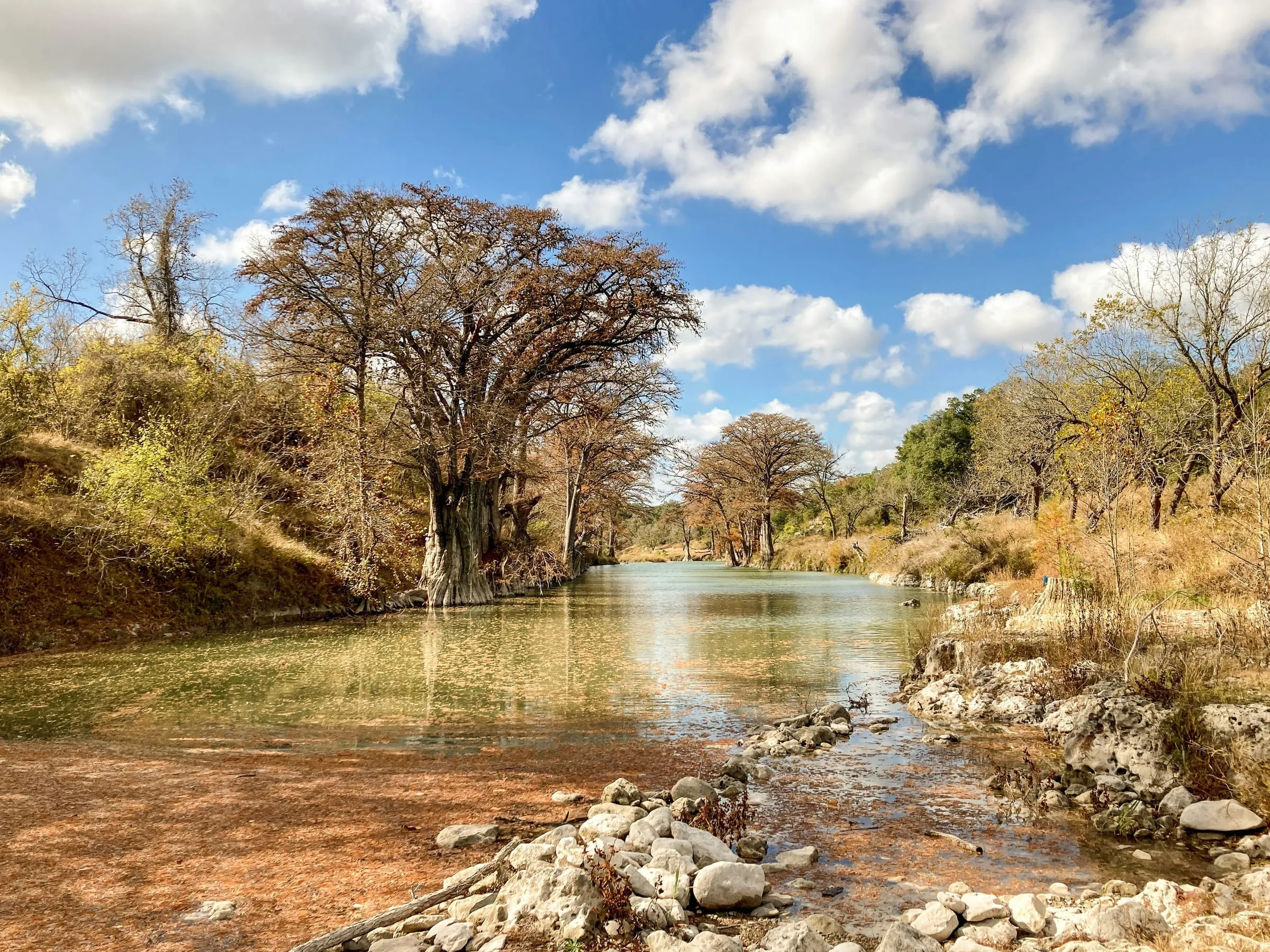
Located northwest of San Antonio near Spring Branch, the park sits on four miles of river frontage and 13 miles of trails. It has cypress-lined banks, a working campground, a paddling trail, and an optional guided hike through the adjacent Honey Creek State Natural Area that most park visitors don’t even know about. The quiet is intentional. The park draws hikers, campers, and families rather than the tube-and-cooler crowd.
If you’ve been to the Guadalupe float trip corridor and want the contrast, this is it.
How to Reserve a Day Pass or Campsite
Texas Parks and Wildlife is direct about this: the park often reaches capacity and highly recommends reservations for both camping and day use. That warning is worth taking seriously on any spring or fall weekend, and especially during the summer busy season.
- Reservations and fees: Reservations are highly recommended and often required on weekends and holidays. Book via the TPWD park page. 2026 entrance fees are $7 per person (ages 13 and older); children 12 and under are free.
- Best season: Spring and fall are the easiest windows for trail-heavy visits. Summer still works well if the river is the point, but the exposed sections of the trail network get hot quickly.
- Parking and arrival: Day-use parking is concentrated around the main river-access lot and park road network. Arriving early matters more on summer Saturdays than on shoulder-season weekdays.
- Camping baseline: With 85 water-and-electric sites plus walk-in options, the park earns an overnight. If you’re packing for that version of the trip, our Hill Country camping gear guide covers what holds up in these state-park camp loops.
One rule worth knowing before you pack: Styrofoam and glass are prohibited in the day-use area along the river banks and while in the river. That applies to coolers, cups, and anything else you’d normally toss in a float bag.
Guadalupe River State Park Trails and Hiking
The 13-mile trail network is the real differentiator for day-use visitors who aren’t camping. Two routes stand out:
Painted Bunting Trail: The park’s most substantial named trail at 2.86 miles. TPWD highlights it as the core moderate trail in the system. Good choice for a morning hike before a river-access afternoon. Full trail details at the official trails page.
River Overlook Trail: Short at 0.3 miles, but the payoff is a scenic view of the river corridor that rewards the walk disproportionately. Best for families, kids, or anyone who wants the scenery without committing to a longer day. Same trails page has the routing.
The park also has mountain biking, birding, and ranger-led Discovery Center programs, the kind of infrastructure that makes the family-camping angle practical rather than optimistic.
If hiking boots are still a pending item before the trip, our best hiking shoes for the Texas Hill Country guide covers what holds up on limestone and uneven Hill Country terrain.
What Is the Bauer Unit (and Is It Worth the Hike)?
The Bauer Unit is a separate section of the park with a different character entirely. Moderate-to-challenging terrain, a 2-to-3-mile downhill hike to river access, and a noticeably quieter atmosphere than the main riverfront.
Come prepared: check in at the main park headquarters first to pay fees and obtain the current gate code for the Bauer Unit entrance. There is no potable water, no restrooms, and no fires permitted in the Bauer Unit. This is not the right choice for casual walkers or anyone who forgot a water bottle. It’s the right choice for stronger hikers who want a less-managed experience on the same river.
Camping at Guadalupe River State Park
The park has three primary camping loops: Cedar Sage ($20/night with 30-amp hookups), Turkey Sink ($24/night with 50-amp hookups), and Wagon Ford ($15/night walk-in tent sites). Overnight options range from fully serviced to primitive depending on what you want. Camping is the strongest case for a longer trip here. The combination of trails, river access, ranger programs, and the potential Honey Creek add-on makes a full weekend worth organizing.
Book well ahead for spring and fall weekends. The campground fills on popular dates and availability disappears faster than most first-time visitors expect.
Can You Kayak or Paddle at Guadalupe River State Park?
The park is the starting point for the Guadalupe River State Park Paddling Trail, which is one of the cleaner ways to differentiate the experience from a tube-rental float. You’re paddling rather than drifting, moving at your own pace, and experiencing the cypress corridor from water level without the float-trip infrastructure around you.
Paddling should be planned around water levels and current conditions. The river responds to rainfall, and the experience ranges from gentle to technical depending on recent weather. Check the TPWD park page for any current advisories before loading a boat.
Honey Creek State Natural Area Guided Tour
Honey Creek State Natural Area sits adjacent to the park and is only accessible via guided tour. TPWD runs guided hikes, typically Saturday mornings at 9:00 a.m. starting from the Rust House, but registration is required and availability is limited.
This is the premium version of a Guadalupe River State Park trip. The natural area is more protected than the main park zone, the guided format adds context that a solo walk can’t replicate, and it gives the whole weekend a specific culminating experience that goes beyond “camp and hike.” Worth planning around if the schedule cooperates.
The Friends of Guadalupe River State Park and Honey Creek nonprofit also supports the park with programming and volunteer events if the community side of the visit matters to you.
What to Bring to Guadalupe River State Park
The packing logic here runs closer to a hike-and-camp day than a float-and-tube day.
Baseline for any visit:
- Water (there’s no fountain at Bauer Unit and the sun on open river banks is unrelenting)
- Sunscreen (the shade along the cypress banks is real, but the exposed sections are not)
- Closed-toe footwear for trails; sandals are fine for the river-access areas
If you’re camping:
- Standard campsite comfort gear (the sites have water and electric hookups but you’re still outside in the Hill Country)
- Food and camp cooking supplies (the park doesn’t have an on-site store)
Skip:
- Glass containers anywhere near the river
- Styrofoam coolers (prohibited in the day-use river areas)
Things to Do Near Guadalupe River State Park
The perfect weekend in New Braunfels guide has the fuller town structure, but the short version is that New Braunfels sits about 30 miles southeast and has food, lodging, and the contrasting float-culture version of the Guadalupe if someone in your group wants that for one of the days.
Spring Branch, the closest small town to the park, has less tourist infrastructure but keeps the Hill Country feel closer. Either direction works depending on how much you want to extend beyond the park itself.