Most camping gear lists are written for alpine trips and cold nights. That logic falls apart fast on a Friday drive into the Hill Country with a cooler, two kids, and a state-park reservation.
Hill Country camping has its own rhythm. Heat matters more than cold. Shade matters more than shaving ounces. Most people are car camping in developed loops, not hiking into the backcountry. And the weekends that look easiest to underpack for are usually the ones that expose bad gear fastest.
This guide is built for that trip: simple shelter, good airflow, lighting that works after dark, and the comfort upgrades that make a one- to three-night state-park weekend feel easy instead of sweaty.
Why Hill Country Camping Is Unique
The Texas Parks and Wildlife campgrounds at Garner, Inks Lake, and Guadalupe River State Park are drive-up loops with picnic tables, fire rings, and, on many sites, electrical hookups. You can bring a lot more than a backpacker would. The only question is what will actually make the trip better.
Heat and sun exposure are the dominant planning variables, especially May through September. Summer highs routinely push past 100°F in the afternoon, and nighttime lows may stay in the upper 70s. A tent that ventilates badly becomes miserable fast. A cheap cooler becomes a watery mess by Saturday afternoon.
Storm swings matter too. The Hill Country sits in a collision zone for Gulf moisture and dry continental air. A calm Saturday morning can turn into a hard thunderstorm by evening. Tent stake-out and rain fly quality matter more here than in drier western climates.
Limestone dust and grit mean your gear takes more punishment than it would on a pine-needle forest floor. Chair feet, cooler lids, and footwear all collect it. Camp organization, keeping things off the ground where you can, pays off over a long weekend.
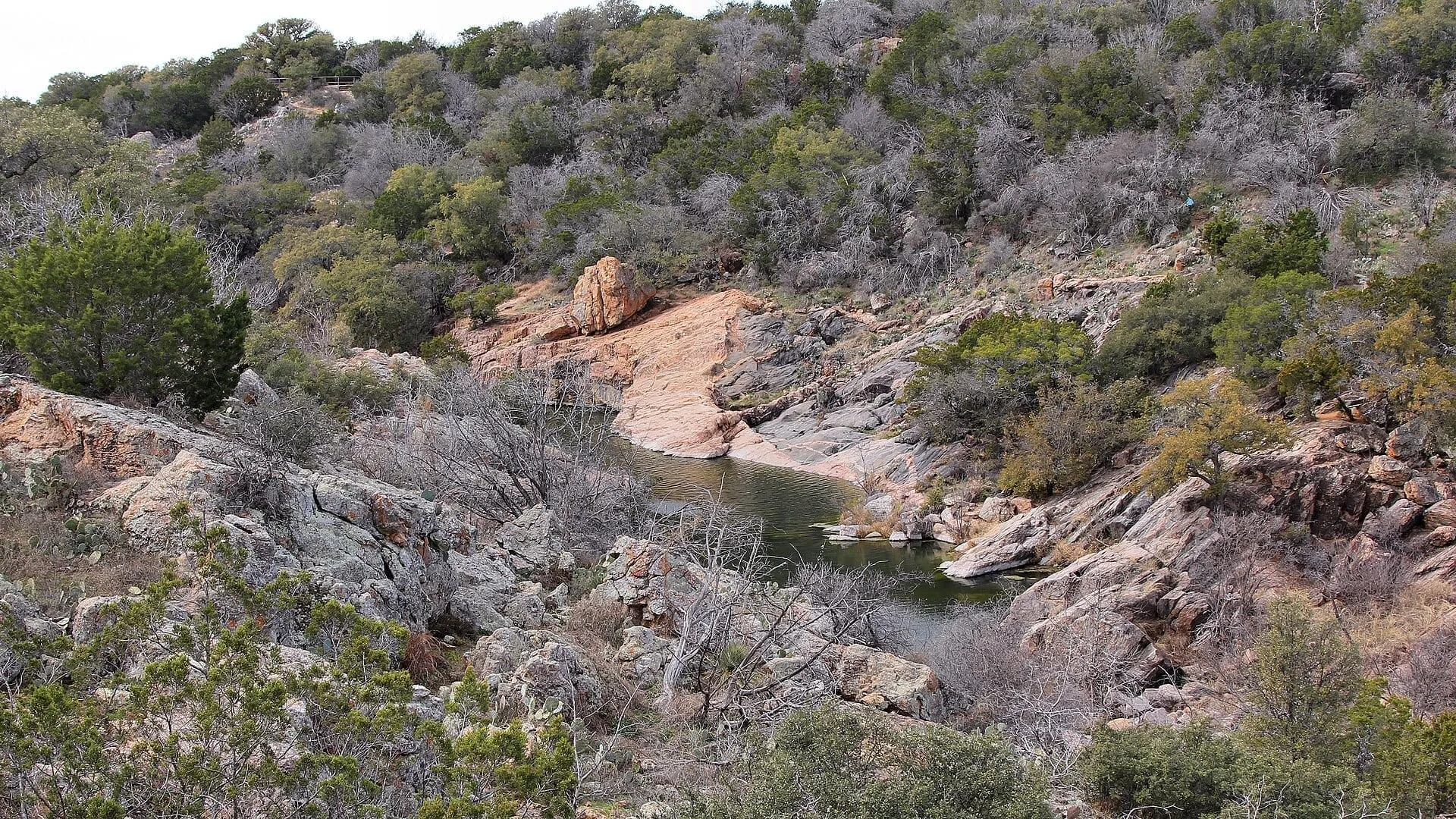
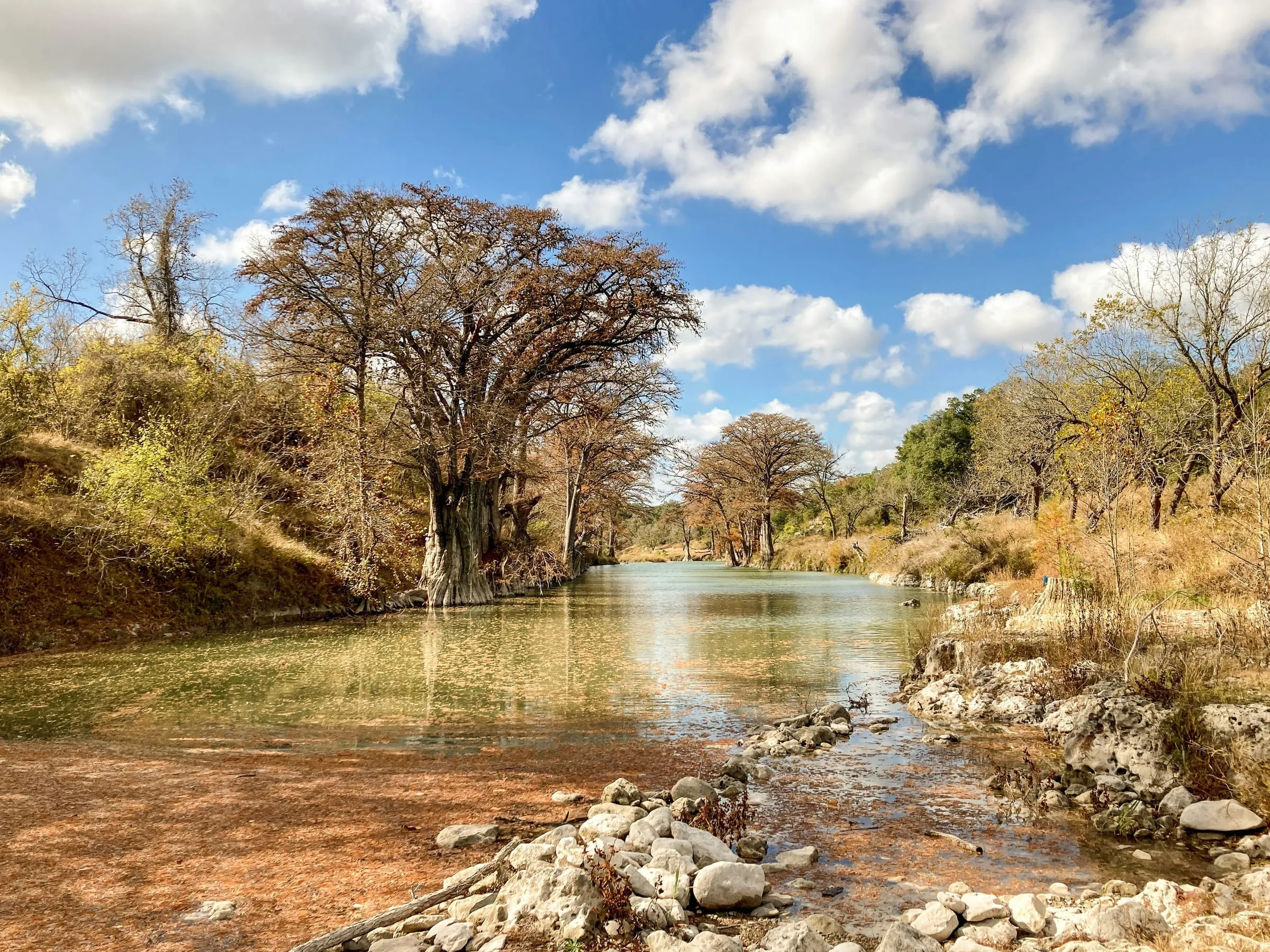
Water proximity varies by park and site. Garner’s loops sit near the Frio River corridor. Some Inks Lake sites put you within easy walking distance of the water. Guadalupe River has a family-campground feel with river access trails nearby. None of these are wilderness destinations, but the humidity near moving water does affect how gear breathes and dries overnight.
If you are planning a float day or a trail run alongside your camp trip, our Frio River float guide and the Enchanted Rock complete guide cover the activity logistics.
Best Tents and Sleeping Gear for Texas Camping
Tent
For a couple or small family doing one to three nights at a state park campground, a four-person dome tent is the right size. A four-person dome in the 7×7 to 8×8-foot range gives you room to spread out sleeping bags, keep bags inside, and sit up if it rains.
The Coleman Sundome 4 is the standard benchmark in this category: a proven, widely available dome tent with a full rain fly and a floor plan sized for the car-camping use case. For those wanting a faster setup, the Coleman Skydome 4P (~$190) offers pre-attached poles that cut setup time to under five minutes.
One tent feature that matters more in Texas: mesh ceiling panels. A tent with a solid interior canopy traps heat aggressively at night. Mesh panels let airflow work even when the rain fly is on.
Sleeping Surface
Car camping means you can bring a proper sleeping pad. A thick self-inflating pad like the REI Camp Dreamer XL ($180–$200) or the ultra-plush Therm-a-Rest MondoKing 3D ($230–$250) makes a noticeable difference on a hot night. Lifting yourself off the ground improves airflow underneath you.
Sleeping bags are almost irrelevant for summer trips. Most Hill Country summer campers do fine with a light quilt or a cotton sheet. Pack a mid-weight bag if you are camping October through March, when shoulder-season overnight lows can drop into the 40s.
Best Headlamps and Lanterns for Your Campsite
State park campgrounds are dark enough to need real lighting but crowded enough that a two-layer system works best: a headlamp for personal movement and a lantern for the table.
Headlamps are the workhorse. The Black Diamond Spot 400 (~$45–$55) is the standard benchmark: multiple lumen settings, a red-light mode for low-impact nighttime navigation, and “Dual-Fuel” capability (AAA batteries or rechargeable Li-ion).
Red-light mode preserves night vision and does not flood neighboring campsites with white light.
For table lighting, a rechargeable LED lantern like the BioLite Alpenglow 500 (~$80) offers accurate color rendering and a “Candle Flicker” mode that keeps the campsite atmosphere relaxed.
Best Coolers and Camp Stoves for Hot Weather
Why Cooler Quality Matters More in Texas
In the Hill Country in summer, a cooler is a planning decision. On a three-day trip at Garner or Inks Lake, you will be resupplying ice by day two if your cooler cannot hold up.
The YETI Tundra 45 (~$325) is the premium benchmark: rotomolded construction, thick insulation, and consistent ice-retention performance built for multi-day summer trips.
The Tundra 45 is expensive. If budget is the constraint, a mid-tier rotomolded cooler from Lifetime or Pelican in the same size class will outperform a standard box cooler and sit well short of YETI pricing. The key spec to look for: days of ice retention in warm conditions, not the manufacturer’s optimistic lab figure, but third-party or user reports at 90°F and above.
A 45-quart cooler fits two to three nights of food and drinks for two adults comfortably. For a family of four on a three-day weekend, size up to 65 quarts or bring a secondary drink cooler. Keeping beverages in a separate box and opening the food cooler less often noticeably extends ice life.
Camp Cooking
Keep the menu simple. The most common Hill Country camp kitchen failure is not under-equipped gear. It is an overcomplicated menu that requires too many cold items, too many burner swaps, and too much cleanup after dark with tired kids around.
A two-burner propane stove, like the Eureka Ignite (~$120), covers most car-camping needs.
A workable rhythm: breakfast at the table with eggs and coffee, a packed lunch at the water or on the trail, and a one-pot or foil-packet dinner after dark with good headlamp coverage. Organize the cooler by meal, not randomly packed. It dramatically reduces how long the lid stays open in the heat.
Essential Camping Checklist for Texas State Parks
Texas Parks and Wildlife campgrounds are easy to use, but they are still campgrounds. The checklist below is the practical version for drive-up Hill Country camping.
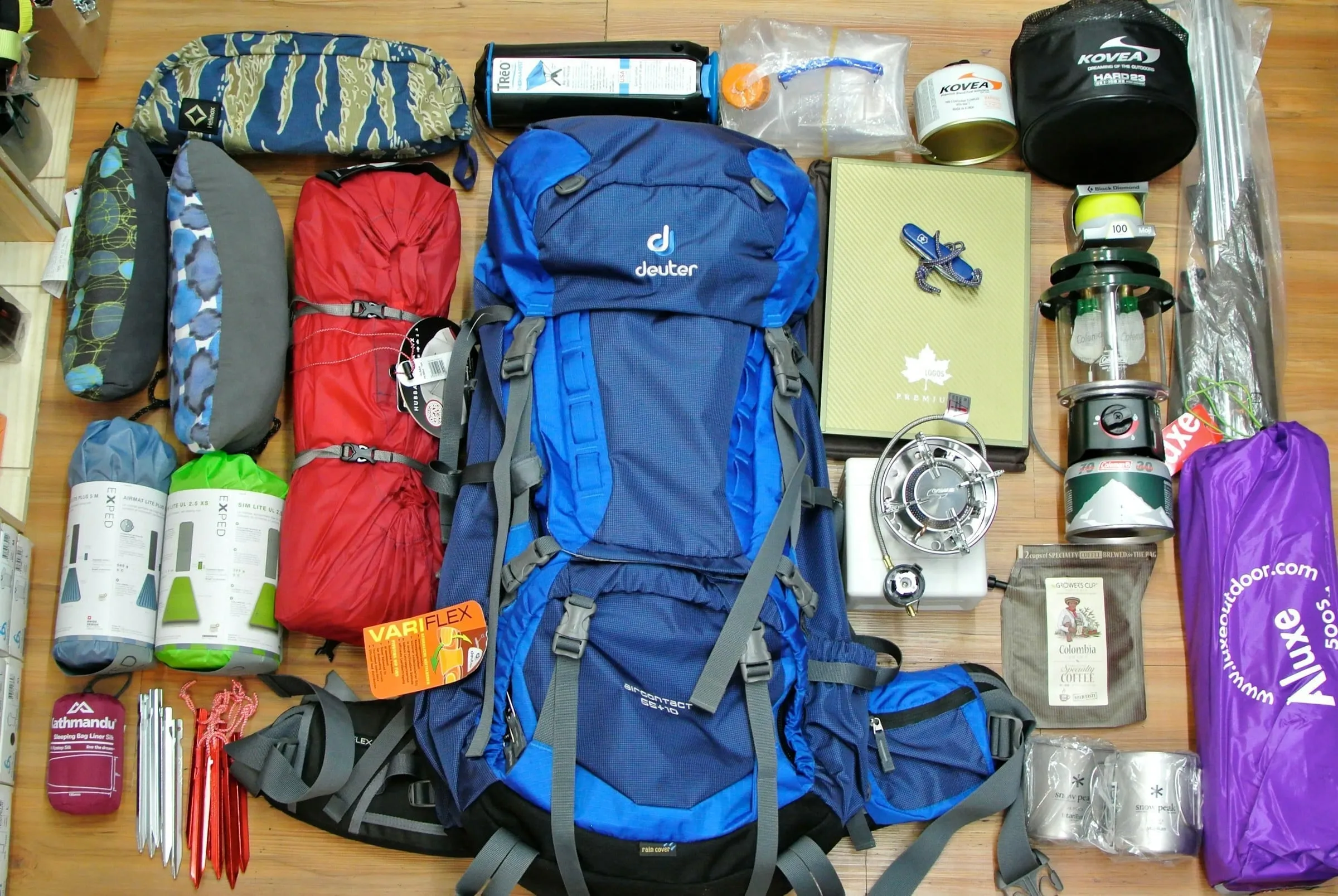
Shelter and sleep: tent, rain fly fully staked, sleeping surface, pillow, light quilt or bag appropriate to season, battery fan in summer
Lighting: headlamp per person (red-light capable), camp lantern or string lights for the table, spare batteries or USB power bank
Hydration: Bring at least one liter of water capacity per person per day for camp use, more if hiking. Note that while major state parks like Garner have potable water at trailheads and camp loops, primitive areas may require you to carry in everything. For mixed camp-and-hike trips, add electrolyte packets to replace what you burn through on hot afternoons.
Food and cooking: cooler sized for your trip length, two-burner stove with fuel, lighter, cookware sized to your menu, biodegradable soap, trash bags, hand sanitizer
Sun and bug management: broad-spectrum sunscreen, lip protection, DEET or permethrin-based insect repellent (mosquitoes and chiggers are serious at riverside and lakeside sites)
Safety basics: basic first aid kit, weather app on your phone with offline download capability, printed or downloaded trail and park map from the TPWD page for your specific park
Camp comfort: chairs per person, a shade tarp or canopy if your site is open, a small whisk broom for limestone dust cleanup. If you add only two “comfort” upgrades for summer, make them a power bank and a battery fan. They do more for a hot campsite than most premium gadgets.
A few park-specific notes: Garner State Park is among the most heavily booked parks in the Texas system and rewards shade, fan power, and quick river access. Inks Lake supports both water recreation and hiking, so your gear list may need to cover both lake humidity and granite dust. Guadalupe River State Park adds more trail mileage and limestone grit than most first-time campers expect, which is why a whisk broom and a doormat are more useful than they sound.
Choosing the Right Camping Gear for Your Trip
Not everyone needs the same setup. Here is how the kit changes across common Hill Country trip scenarios.
| Trip | Tent | Cooler | Lighting | Priority Add |
|---|---|---|---|---|
| One-night easy weekend | 4-person dome | Mid-tier 40–45 qt | Headlamp per person | Camp chairs |
| Hot family weekend, 3 days | 4-person dome or larger | Premium 65 qt | Headlamps + table lantern | Battery fan, shade tarp |
| Park-hopping long weekend | Compact 4-person dome | Premium 45–65 qt | Full kit with USB power bank | Organized storage system |
The park-hopping scenario deserves a specific note: moving between sites means setup and breakdown efficiency matters. A tent that stakes out fast, a cooler you can lift and slide, and a lighting kit that charges off one power bank rather than a mix of different batteries will reduce friction meaningfully across multiple nights.
For destination ideas to build a longer trip around, the Lost Maples hiking guide covers one of the most scenic (and most reservation-competitive) camping and hiking destinations in the Hill Country.
Camping Gear Budget and Cost Guide
The ladder here runs from budget to upgrade, and not every camper needs to start at the top.
Budget tier: a dome tent from a major outdoor chain, a 40-quart name-brand cooler, and a rechargeable headlamp with a red-light mode. Serviceable for one-night trips in shoulder season or cooler months.
Practical tier: mid-range dome tent with mesh interior, rotomolded cooler in the 45-quart range, headlamp with 300+ lumens and red-light mode, battery fan, and a basic camp chair per person. This is where most repeat Hill Country campers land.
Upgrade tier: the products benchmarked above, built for the hottest summer weekends and the most logistically complex multi-day trips.
The biggest quality jump most campers will actually feel is in the cooler. Ice retention in July heat is tangible in a way that marginal tent weight differences or headlamp lumen gaps are not. If you are making one upgrade for a summer trip, make it the cooler.