At a Glance
10 AM-4 PM
UV Window
Peak midday exposure when most Hill Country outings get risky
UPF shirt
Best First Upgrade
Covers the most skin with the least maintenance
Every 2 hrs
Reapply Rule
Sooner after swimming or heavy sweat
Trail + river
Best Use Case
Works across exposed hikes, floats, and park days
Most people who get cooked on a Texas outdoor day did not forget the sun exists. They just guessed wrong about how long they would be out, skipped one reapplication, or treated a baseball cap like a full plan.
The Hill Country does not give you much margin for that. Granite domes, river corridors, and open state-park loops all stay exposed when the day is hottest. The smartest setup here is not one miracle sunscreen. It is a simple system you will use.
Best Sun Protection by Activity
| Situation | Priority Layer | Best Move |
|---|---|---|
| Exposed trail day | Lightweight UPF hoody | Cover arms, neck, and shoulders before you leave the car |
| River day or water exposure | Neck-covering hat + water-resistant sunscreen | Plan reapplication into the float, not as an afterthought |
| Family or casual park day | Brimmed hat + SPF 30+ | Apply before arrival and reapply once midday |
| All-day mixed activity | Hat + hoody + sunscreen on exposed skin | Use clothing for coverage and sunscreen for the gaps |
Why You Need a Different Sun Protection Plan in Texas
Heat and UV are related, but they are not the same problem. The National Weather Service’s heat guidance makes the useful point: shade, clothing, hydration, and timing all shape how long a day stays comfortable. That is a better Hill Country frame than telling people to buy stronger sunscreen and hope for the best.
The CDC recommends a layered approach: seek shade, wear protective clothing and a real hat, use broad-spectrum sunscreen, and reapply after swimming, sweating, or every two hours during long outdoor stretches. That maps cleanly to Hill Country days. Clothing and hats do the passive work. Sunscreen covers what is left and needs follow-through.
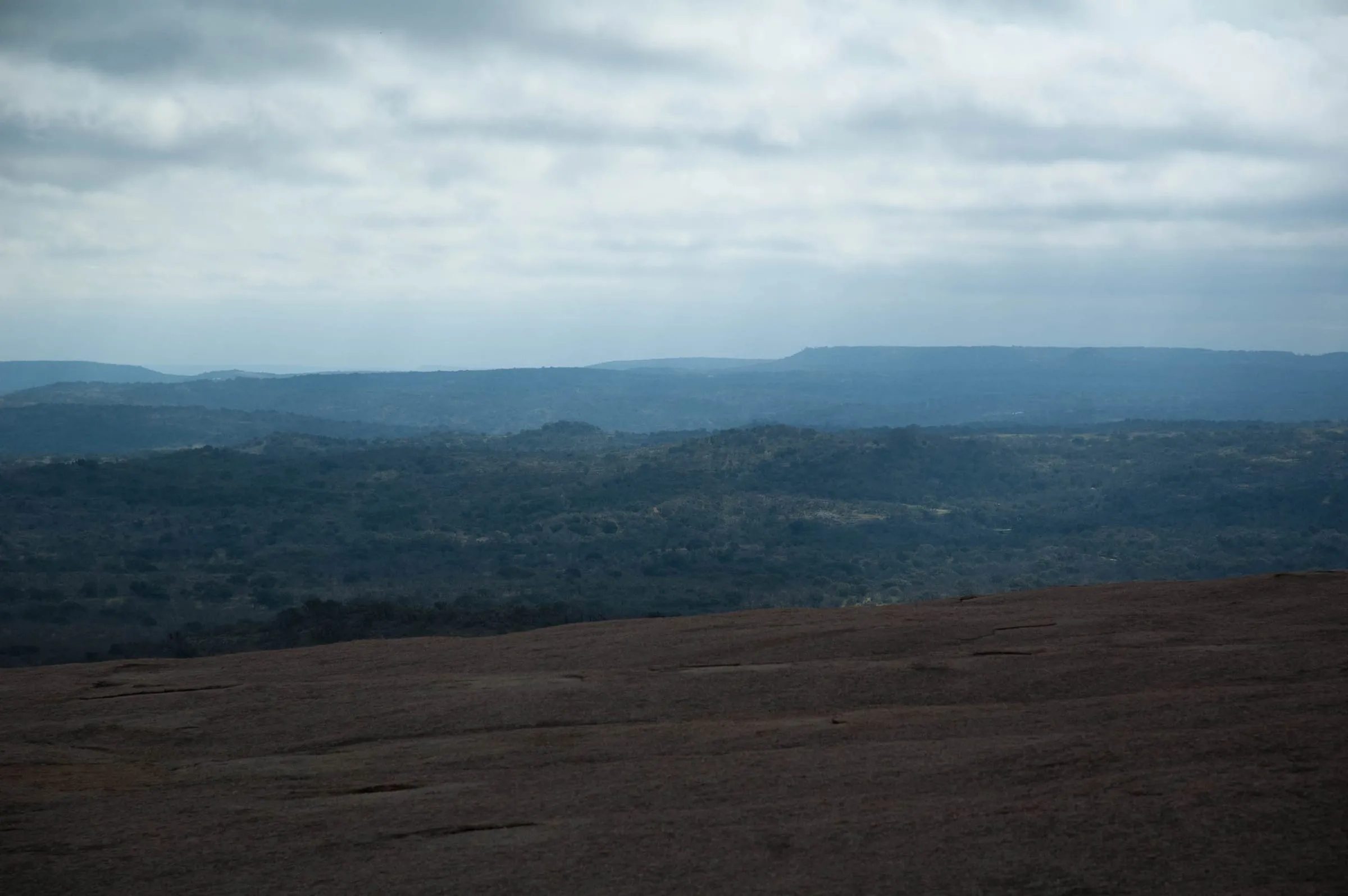
Enchanted Rock is the easiest example. The summit route is short enough that people pack light, but the exposed granite and limited shade make it exactly the wrong place to rely on one rushed sunscreen application. What works here also works on a float day or a family park afternoon.
Why a UPF Sun Shirt Is Better Than Sunscreen Alone
How UPF Clothing Reduces Sunscreen Reapplication
The Skin Cancer Foundation’s guidance on sun-protective clothing makes the case clearly: tightly woven UPF-rated fabric blocks UV more consistently than sunscreen alone because it does not wash off, sweat off, or miss spots. A good sun shirt removes a large chunk of your body from the reapplication problem entirely.
That matters more than most people think. On a three-hour exposed hike, most people will reapply once at best. If your arms, shoulders, and upper back are already covered by a lightweight long-sleeve shirt, the sunscreen you need to maintain drops to your face, hands, and a few exposed gaps.
The category worth looking for is lightweight UPF fabric that still feels livable in Texas heat. A cotton long sleeve usually turns into a bad decision by late morning. A purpose-built sun hoody keeps working once sweat becomes part of the day.
The Patagonia Capilene Cool Daily Hoody (~$55) is a strong benchmark for the category. While Patagonia no longer lists a specific UPF rating for this line (marketing focuses on moisture-wicking and odor control), independent tests typically place it between UPF 17 and 45 depending on color. If you are planning a granite-dome hike or any other exposed trail day, this is the kind of layer that earns its place quickly.
Our Enchanted Rock packing guide covers the full trail kit if that is the specific day you are planning.
If the Patagonia price point is too high, Columbia’s PFG or Omni-Shade lineup offers reliable UPF 50 protection at a lower cost (~$30–$45). The important thing is not the badge on the chest. It is lightweight coverage you will keep on when the day gets hot.
If budget matters more than premium fabric feel, a value-focused Columbia Omni-Shade or PFG-style shirt is usually the right comparison point. What you’re buying is not status. It’s enough lightweight coverage that adults will keep it on and kids won’t fight it by lunchtime.
Do You Need More Than a Baseball Cap for Sun Protection?
A baseball cap protects your face and forehead. It does very little for your ears, the back of your neck, and the sides of your face, which are exactly the places people forget to cover and regret later.
That is fine for a quick errand or a short walk from trailhead to overlook. It is not enough for a river float, a long exposed hike, or a family day where everyone will be outside from late morning into the afternoon.
The Outdoor Research Sun Runner Cap (~$38) is a useful benchmark because the removable cape covers the ear-to-neck gap that standard caps leave exposed. It carries a UPF 40 rating and has breathable mesh side panels. It is not the only good hat in the category, but it shows what “more than a baseball cap” looks like.
If you do not want a cape-style cap, a wide-brim hat with real back-of-neck coverage works too. The test is simple: if the hat only shades your face in front, it is not solving the full problem.
How Often to Reapply Sunscreen on a Texas Outdoor Day
Sunscreen still matters because clothing cannot cover everything. Your face, ears, hands, lower legs on some river days, and the tops of your feet in sandals or water shoes still need direct protection.
The CDC guidance is useful because it is practical: use broad-spectrum sunscreen and reapply every two hours, or after swimming and sweating. That sounds easy until you picture a full Hill Country day. If your float starts at 10 a.m. and ends midafternoon, you do not need sunscreen once. You need a routine.
A few spots deserve special attention:
- Ears
- Back of the neck below a short-brimmed hat
- Tops of feet in sandals or water shoes
- Tops of shoulders on water days
- Back of the hands
- Lips
For river days, water-resistant formulas matter, but they are not a free pass. The point of water resistance is to buy time, not eliminate reapplication.
For children, apply a broad-spectrum mineral sunscreen (containing zinc oxide or titanium dioxide) with at least SPF 30 to all exposed skin 15–30 minutes before going outside. Clothing and shade remain the first line of defense.
Sun Protection for Hiking vs. River Days vs. Park Days
What to Wear on an Exposed Texas Trail
Trail and hike days reward the clothing-first approach most strongly. You are moving, sweating, and staying in the sun long enough that reapplying sunscreen over large skin areas becomes annoying fast.
For a day like Enchanted Rock, the smart setup is a lightweight sun shirt, a hat with better-than-basic coverage, and sunscreen on your face, ears, hands, and any exposed skin. That keeps the maintenance work small enough that you might do it.
Bring enough water that sun protection is not separated from heat management. Our hydration guide is the natural companion if you are planning a hotter, longer outing.
Sun Protection for Tubing and River Floats
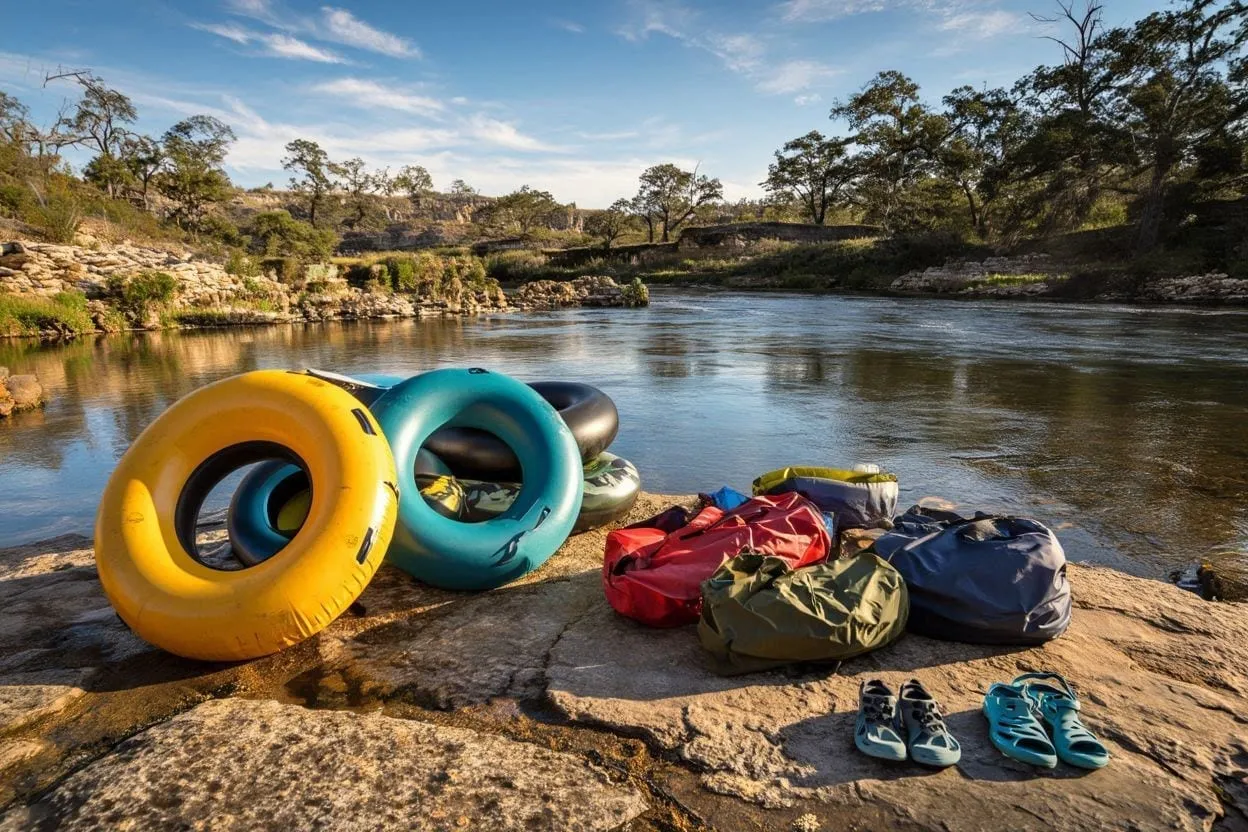
River days feel cooler than they are, which is why people underestimate them. Water reflects sun, sunscreen wears down faster, and the half-in, half-out rhythm of tubing or swimming exposes body angles that people do not think about ahead of time.
This is where a neck-covering hat and deliberate reapplication strategy matter most. A sun shirt still helps, especially for shoulders and upper arms, but river days ask more from sunscreen than hike days do.
If you are packing for the float itself, our river gear guide pairs naturally with this checklist.
Sun Protection for a Park or Town Day
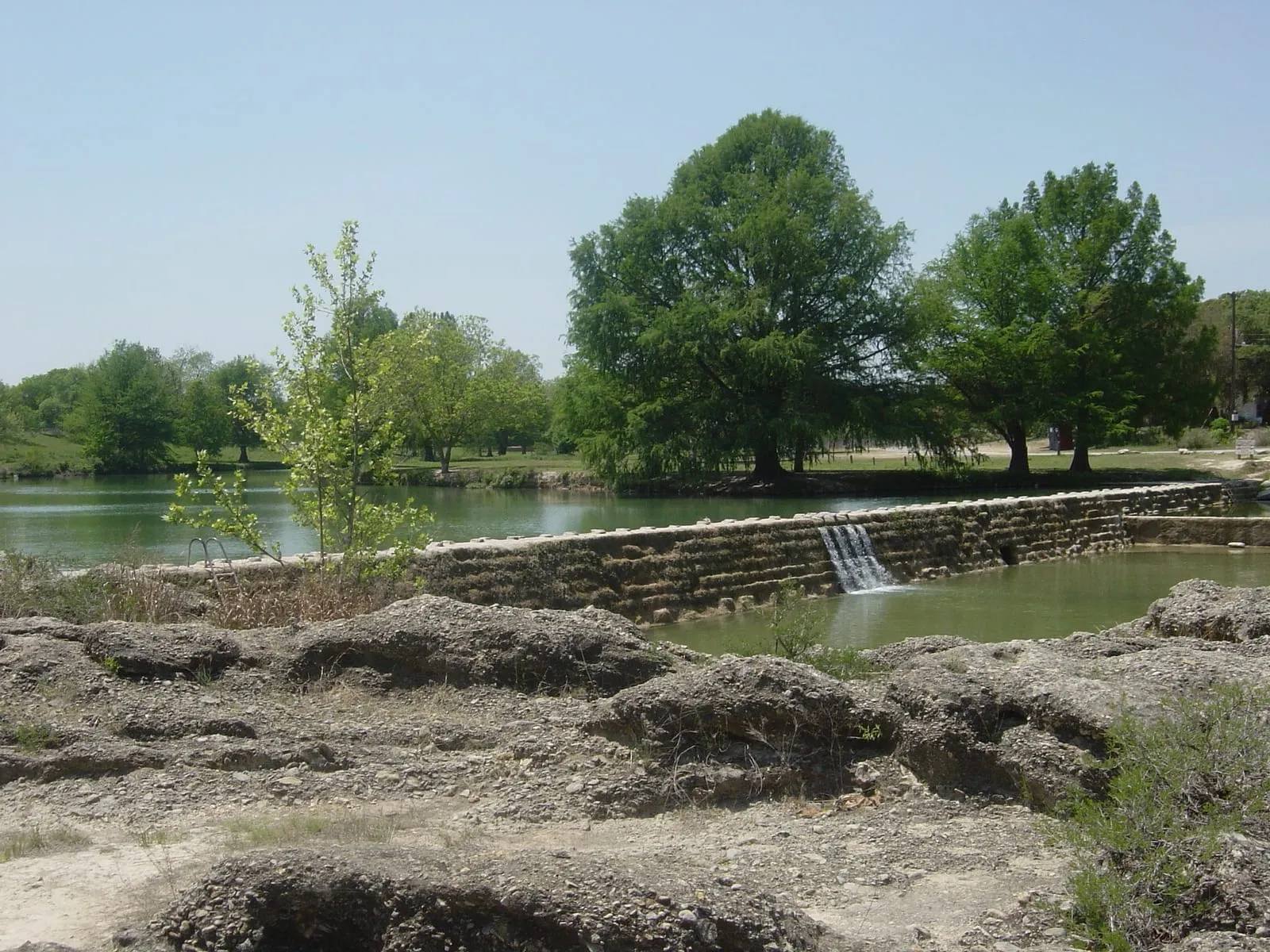
These are the days people underestimate most. A park picnic, a farmers market, a courthouse-square walk, or an easy swimming-hole stop can still stack up hours in direct sun.
The system can be lighter here: a brimmed hat, sunscreen on exposed skin, and one planned midday reapplication usually cover the realistic exposure. The mistake is assuming a “casual” day means the sun is not part of the trip.
This is also the easiest lane for family use. If you’re packing for parents, grandparents, and kids on the same outing, the simplest system is usually the best one: everyone starts in a hat, everyone gets sunscreen before arrival, and one adult carries the reapplication bottle rather than assuming each person will remember their own.
Where Do People Get Sunburned the Most?
Even people who spend time outside miss the same places over and over:
- Tops of ears
- Back of the neck
- Tops of feet
- Shoulders on river days
- The part in your hair
- Backs of hands
That is one reason to lean so hard on clothing and hat coverage. The fewer exposed zones you create, the fewer places you have to remember later.
Build a System, Not a Single Purchase
The takeaway is simple: no single layer is enough on a full Texas outdoor day.
Clothing gives you the set-it-and-forget-it protection. Hats help close the gap around the face, ears, and neck. Sunscreen covers what remains and needs follow-through.
For exposed trail days, a sun hoody plus a real hat plus sunscreen on exposed skin is the easiest system to maintain. For river days, sunscreen matters more often and hats need to stay useful around water. For family park days, the system can be simpler, but skipping it entirely is where people get burned.
The gear is simple. The hard part is remembering to use it once the day gets rolling, which is why the best setup is the one that does most of the work before you even leave the car.