At a Glance
425 ft gain
Summit climb
32 oz/hr
Water math
Heat + sun
Biggest hazard
Day pass
Book ahead
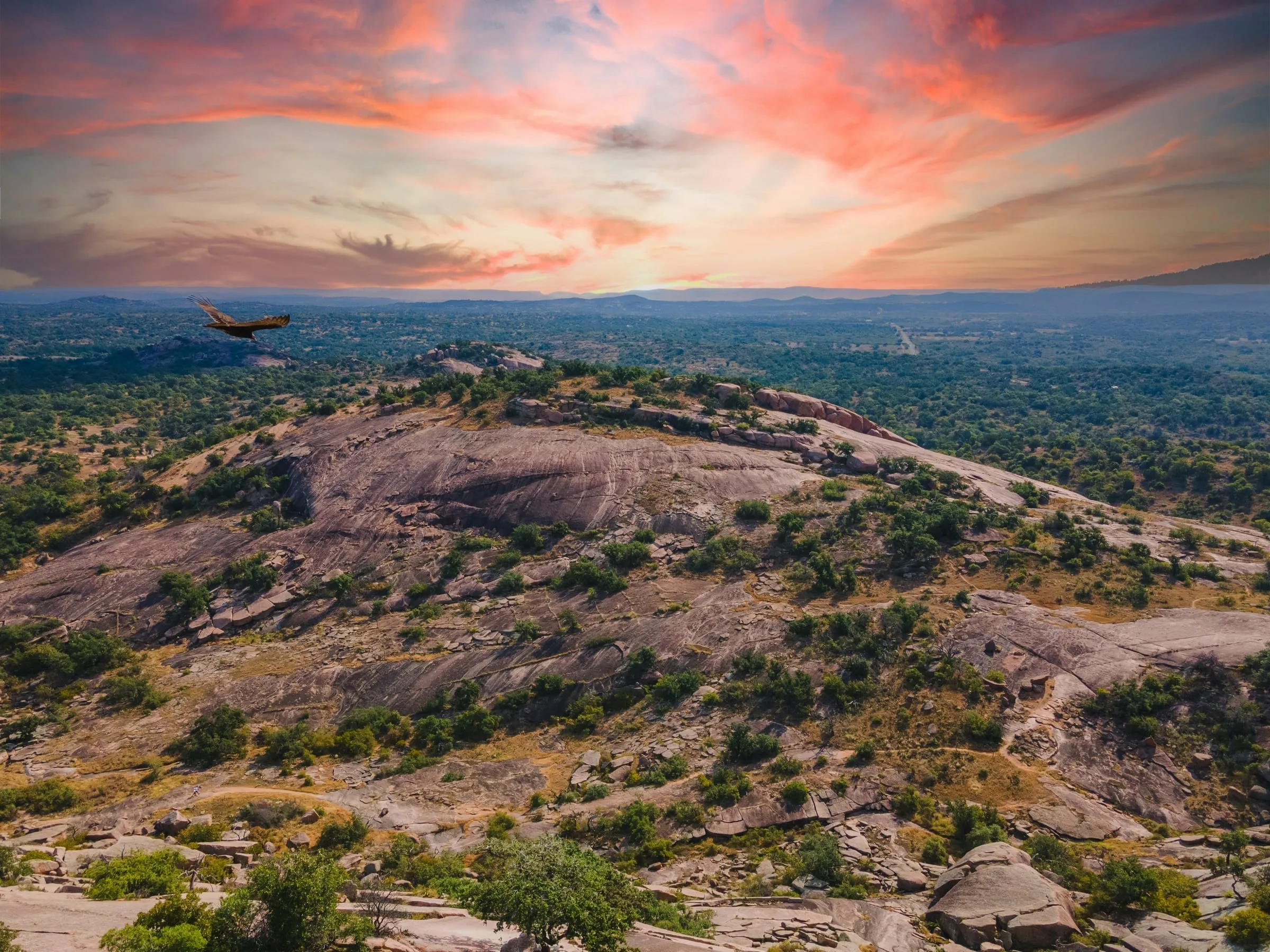
The Summit Trail at Enchanted Rock is 0.8 miles. That number makes it sound easy. It isn’t.
You’re climbing 425 feet of exposed pink granite under open sky, often in direct sun, with no shade and no water source on the route. The dome reflects heat. Wind can appear and disappear. And if the weather shifts, TPWD closes the elevated areas without much ceremony. What you carry in your pack when you leave the trailhead is all you’ve got.
Most underprepared visitors don’t catastrophically fail. They just have a bad time. Cramps at the summit, sunburned arms, a near-empty water bottle with a third of the descent still to go. The fix for all of it is cheap and light. This list is built around what matters at Enchanted Rock specifically, not a generic 10-essentials for a forest trail in the Cascades.
For the full park overview and trail breakdown, see the Enchanted Rock complete guide.
Quick Reference: Summit vs. Loop Day
| Item | Summit push (0.8 mi) | Full loop day (longer) |
|---|---|---|
| Water | 32 oz per hour per person, minimum | Same rate (more hours, more water) |
| Footwear | Good-tread trail shoes or hiking boots | Same |
| Sun hat | Essential | Essential |
| Sunscreen | Essential | Essential |
| Trekking poles | Optional | Helpful on descent |
| Headlamp / flashlight | Only if staying past sunset | Yes (Loop Trail stays open later) |
| Snacks | Light (short effort) | Real food if spending the day |
| Trail map | Helpful | Recommended |
| First-aid kit | Basic | Expanded |
| Dog | Not allowed on summit | Loop Trail only, strictly enforced |
Footwear: The One Item That Changes the Hike
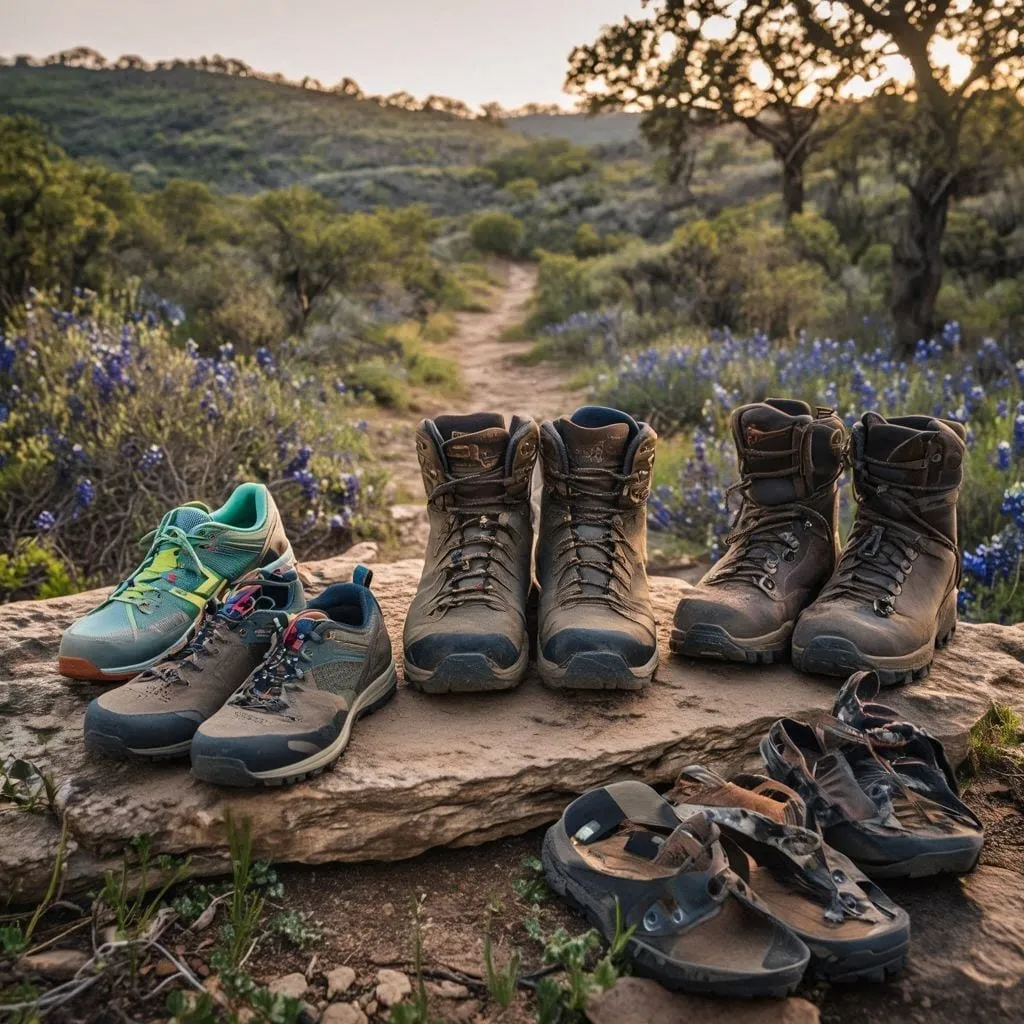
TPWD’s guided summit page says it plainly: bring hiking boots or shoes with good tread. This isn’t CYA language. The granite is rough in the dry season and turns into a slip surface when wet. The grade on the Summit Trail is steep enough that a loose sole or worn-out flat-bottomed shoe becomes a real problem on the way down, when tired legs and gravity are working together against you.
You don’t need technical mountaineering footwear. A standard trail shoe with an intact rubber sole and ankle support does the job. What doesn’t work: canvas sneakers, flip-flops, dress shoes, and worn-out athletic trainers with no grip left. If you’re packing for a Fredericksburg weekend and Enchanted Rock is on the agenda, the footwear question deserves a real answer before you leave home. For a deeper look at the right footwear for the region, see our guide to the best hiking shoes for Texas Hill Country trails.
The Merrell Moab 3 is a dependable choice for this kind of Texas day hike. It has enough support for the descent and is breathable enough that your feet aren’t cooked by mile one.
Trail runners also work if they have solid traction. What matters is the grip, not the brand.
Water: The Calculation You Should Actually Do
Thirty-two ounces per person per hour. That’s the number from TPWD’s own guided summit hike guidance, and it’s conservative for a hot Texas afternoon, not generous. A single 16-oz bottle is not a plan. It’s barely a warmup.
The Summit Trail takes most reasonably fit adults 45–90 minutes round trip. Do the math: one person doing the summit in 90 minutes of direct summer sun needs at least 48 oz before you account for the drive, the trailhead walk, or any time on additional trails. Bring more than you think you need. The park has no water resupply on the dome itself.
Cold water stays cold. If you’re hiking in warmer months, a vacuum-insulated bottle matters more than it does on a cool October morning. Carrying warm water in August is functional, but it stops being refreshing about 20 minutes in.
Electrolytes are worth adding if you’re hiking in heat. Cramping is a real outcome on this dome, and salt matters once you’re sweating heavily. A few packets of electrolyte powder or a handful of salted crackers do more than another gulp of plain water at that point.
Sun Protection: You Are the Highest Object on the Rock
There is no shade on the summit. There is no tree line. When you step off the lower trail section and onto the open dome, you’re fully exposed to whatever the sky is doing. In spring and fall that’s often fine. In summer it’s punishing. Even in winter, the granite amplifies sun on clear days in ways that catch people off guard.
TPWD’s guided summit guidance explicitly includes sunscreen in the bring list. That’s a good floor, not a ceiling.
What to bring:
- Sunscreen, SPF 30 or higher. Apply before you get out of the car, not at the trailhead.
- A brimmed hat. Baseball cap does the face. A wide brim does the ears and neck too, and the neck is where most people get burned.
- A lightweight long-sleeve shirt or sun shirt. Optional, but worth considering for anyone who burns easily or is doing multiple hours outside. One layer over your arms beats reapplying sunscreen mid-hike.
Sunglasses are worth having. The granite reflects light upward as well as absorbing it, and squinting across an exposed dome for an hour is the kind of subtle fatigue that makes the drive back worse.
Navigation: Paper Beats Assumptions
The park is not technically complex, but first-time visitors routinely miss connectors, cut across the wrong slope, or underestimate how disorienting the dome looks from different angles when they’re tired. TPWD offers a downloadable trails map PDF. Download it before you go and screenshot the trailhead area. Cell signal is inconsistent inside the park.
The trails information page is the cleanest current source for what’s open and when. Most trails close 30 minutes after sunset. The Loop Trail is one exception (it stays open later for visitors doing dark-sky viewing), but even that requires checking current conditions before you plan around it. If stargazing is the plan, bring a headlamp regardless. The trail map and your phone screen are not illumination.
Rules and Assumptions That Get People in Trouble
Dogs can’t do the summit. This is a hard TPWD rule. Pets are not allowed on elevated areas, which includes the Summit Trail. The Loop Trail allows leashed pets, but the summit dome is off-limits for dogs regardless of size, temperament, or your confidence in your animal. Plan accordingly: either leave the dog at home, or know that your trip is a Loop Trail day rather than a summit day.
Don’t assume the summit will be open. The elevated areas close during wet or inclement weather. If there’s been recent rain or a front is moving through, the dome may be closed when you arrive. TPWD posts alerts and closures on the park page. Check it the morning of your trip, not three days ahead.
Don’t underprepare because the distance is short. The Summit Trail is 0.6 miles one-way. That is short. But the grade, the exposure, and the heat load on a summer afternoon make it consequential in ways that a flat 2-mile trail in the shade is not. Pack for the conditions, not the mileage.
Reservations and access are not something to wing. Enchanted Rock is a high-demand park, and TPWD requires day-use reservations (Save the Day passes) for entry, especially on weekends and during peak spring or holiday periods. Passes can be booked up to 30 days in advance. Check the Texas State Parks reservation system before your trip. Showing up without a pass carries a real risk of being turned away at the gate.
After Dark: The Flashlight Is Not Optional
Enchanted Rock has a legitimate stargazing reputation. The Loop Trail staying open past sunset makes an evening visit viable. If that’s the plan, a headlamp or small flashlight moves from “optional” to essential. The trail surface isn’t technical, but navigating granite steps and root sections in the dark without illumination is how ankle rolls happen.
NPS lists illumination as one of the ten hiking essentials for exactly this reason. Not because the trail is dangerous, but because conditions change and surprises happen. Carry it even if you plan to be out before dark. Plans shift.
The Night-Before Checklist
Laying this out the evening before gives you time to swap the worn-out shoes and remember the sunscreen still sitting on your bathroom counter.
- Trail shoes or hiking boots with solid tread
- Water bottles, 32 oz per person per hour, packed full
- Sunscreen applied before the trailhead
- Brimmed hat
- Snacks or trail food (more if staying for a loop day)
- Downloaded or printed trail map (or screenshot saved offline)
- Headlamp or flashlight if any chance of a late return
- Basic first-aid kit (blister pads and ibuprofen at minimum)
- Reservation confirmation on your phone
- Dog staying home, or Loop Trail as the explicit plan
That’s it. Nothing exotic, nothing heavy. The summit is a short, steep, memorable hike and the gear list reflects that.
Before You Leave Town
If you’re making this a Fredericksburg weekend (which is the move for most people driving from Austin or San Antonio), the guide to a perfect weekend in Fredericksburg covers how to build the surrounding day and where to stay. The 10 best hiking trails near Fredericksburg has route options if Enchanted Rock sells out or you want a backup trail on the second day.
The reservation for Enchanted Rock should be your first step, not your last. Book through the Texas State Parks site before you commit to the rest of the trip.